Chimney odors after rain often develop when moisture intensifies the smell of soot and creosote inside the flue. Air moving down the chimney can then carry that smell into the house. Water entering through damaged chimney components may contribute, but an odor alone does not identify the exact defect.
November and December bring wet weather, colder surfaces, and greater demand for heating. A recurring smell deserves attention before regular fireplace use, particularly when it appears alongside water stains, crumbling mortar, or smoke entering the room.
What Does the Smell Tell You?
Describe the odor carefully when booking an inspection. Different smells can suggest different problems:
- Smoky or tar-like: Often associated with soot or creosote deposits.
- Musty or earthy: May suggest persistent dampness in or around the chimney.
- Decaying or animal-like: Could indicate nesting material or an obstruction requiring investigation.
These descriptions are clues, not diagnoses. A smoky smell does not establish how much creosote is present, and a musty smell alone does not confirm mould. Inspection is more reliable than choosing a treatment based on smell.
How Does Moisture Enter a Chimney?
Rain can reach the chimney through several routes. A missing or damaged cap may allow water into the flue. Cracked crown surfaces, deteriorated mortar joints, damaged bricks, or failed flashing can also admit moisture around the masonry and roof connection.
Watch for accompanying signs:
- Damp fireplace walls or stained ceilings.
- Flaking brick faces or missing mortar.
- Water collecting in the firebox.
- White deposits on exterior masonry.
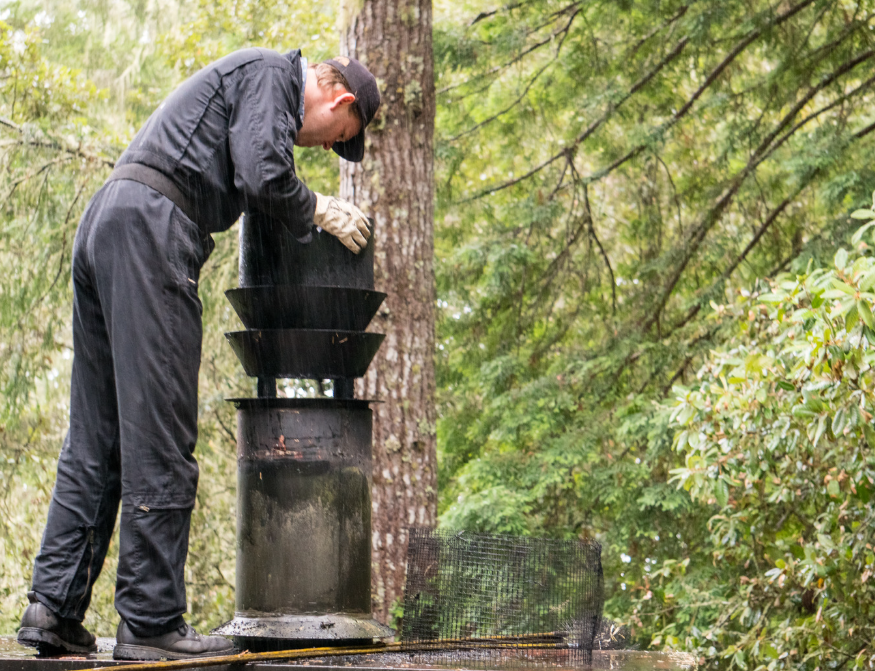
Check only from safe, accessible positions. Roof access and close examination of the chimney top belong with appropriately equipped professionals.
Can Air Pressure Cause the Smell?
Yes. Chimney odors can enter a room when household air pressure draws air down the flue. Exhaust fans and other air-moving equipment may influence that pressure balance. Humidity can make existing creosote odors more noticeable even without a newly developed rain leak.
This explains why cleaning alone may not completely resolve the problem. The investigation may need to address deposits, moisture entry, and airflow together.
Do not block ventilation openings or modify dampers without advice. Changes intended to stop odors must not interfere with safe appliance venting.
Which Repairs Actually Help?
The appropriate solution depends on the findings. Possible work includes:
- Professional sweeping when deposits require removal.
- Cap replacement when rain protection is missing or damaged.
- Crown repair when cracks admit water.
- Mortar-joint restoration where deterioration allows moisture entry.
- Flashing repair when the roof connection leaks.
- Further venting assessment when airflow or liner concerns arise.
Deodorizers may mask the smell without correcting its cause. Likewise, coating damp brickwork without investigating the moisture route can leave the underlying problem unresolved.
When Should You Stop Using the Fireplace?
Stop using the fireplace if smoke enters the room, water is actively entering, masonry appears unstable, or an inspection identifies unsafe conditions. Carbon monoxide cannot be detected by smell; working alarms remain essential.
Photograph staining, record when odors occur, and note whether exhaust fans were operating. These details help distinguish a rain-related masonry problem from an airflow issue.
Address Chimney Moisture With Cummins Restorations
Contact Cummins Restorations if recurring chimney odors accompany cracked joints, deteriorating brick, or signs of water entry. The company provides chimney and masonry repairs, including tuckpointing, crown repairs, and rebuilding when necessary. Request an assessment of the exterior masonry and discuss whether additional sweeping or venting evaluation is needed. Arranging advice before winter weather worsens helps you understand the repair priorities instead of repeatedly masking an odor while moisture continues affecting the chimney.


