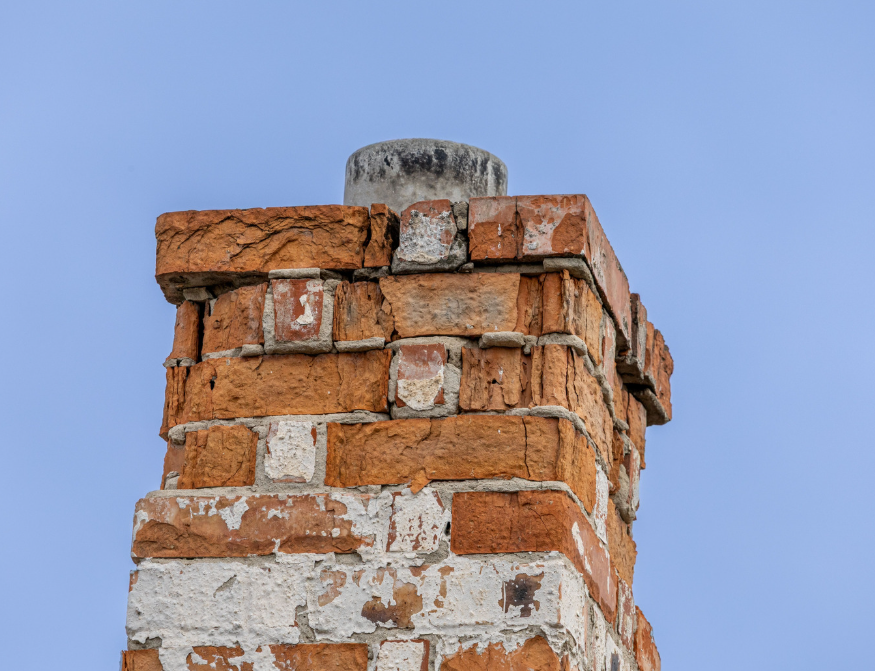
Brick efflorescence is a deposit of salts left on masonry after moisture moves through the material and evaporates. It commonly appears as white or grey powder, streaks, or patches. The deposit does not automatically mean your chimney needs rebuilding, but it warrants investigating moisture movement.
During November and December, repeated wetting and colder temperatures make chimney maintenance important. Rather than treating every white mark as cosmetic, consider when it appeared, whether it returns, and the condition of nearby bricks and mortar.
What Causes White Stains on Chimney Bricks?
Efflorescence develops when three conditions occur together:
- Soluble salts are present in masonry materials.
- Water dissolves and transports those salts.
- Moisture reaches the surface and evaporates.
The remaining crystals form the visible stain. Removing the deposit may improve appearance, but fresh staining can develop if moisture continues carrying salts outward. Cleaning and moisture control are therefore separate tasks.
Photograph stained areas after wet weather. Comparing photographs over time can reveal whether deposits are spreading, disappearing, or returning in the same locations.
Do White Stains Mean the Chimney Is Leaking?
Not necessarily. Efflorescence indicates that moisture has moved through masonry, but it does not identify the entry point or prove water is reaching your interior.
An inspection may investigate:
- Cracks in the chimney crown.
- Deteriorated or missing mortar.
- Damaged brick surfaces.
- Defective flashing around the roof connection.
- Missing or damaged rain protection.
The chimney should be assessed as a complete assembly. Repairing one visible joint will not resolve moisture entering elsewhere. Likewise, a clean exterior does not establish that hidden components are sound.
When Should You Worry About White Deposits?
The surrounding condition matters more than the stain alone. Arrange an assessment when white deposits appear beside:
- Flaking or crumbling brick faces.
- Loose, cracked, or powdery mortar.
- Persistent damp patches.
- Interior ceiling or wall stains.
- Displaced bricks or visibly unstable masonry.
Flaking brick, called spalling, is different from a removable salt deposit. It involves loss of the brick’s surface material. Moisture and freezing conditions can contribute to deterioration.
A leaning chimney or falling masonry requires prompt professional attention. Keep people away from affected areas rather than approaching the structure or climbing onto the roof.
Can You Remove Brick Efflorescence Yourself?
Light deposits may respond to careful dry brushing, but the right approach depends on the masonry and the stain. Not every white mark is efflorescence. Paint residue and other deposits can require different treatment.
Avoid experimenting with strong acids, aggressive abrasives, or high-pressure washing. Inappropriate cleaning can damage brick faces and mortar, creating a larger problem.
Older, fragile, or previously repaired masonry deserves particular care. A test area and professional diagnosis can help prevent uneven results. Cleaning should follow an assessment, not replace one.
How Can You Stop the Stains Returning?
Prevention starts with correcting relevant moisture defects. Depending on the findings, repairs may include restoring mortar joints, repairing the crown, replacing damaged bricks, or addressing the roof connection.
Do not assume every chimney needs a coating. Any proposed water-repellent treatment should suit the masonry and follow necessary repairs. Monitor the repaired area afterward, because returning deposits may indicate continuing moisture movement or residual salts drying out.
Protect Your Chimney With Cummins Restorations
Contact Cummins Restorations if white chimney stains return repeatedly or appear alongside damaged bricks and mortar. The company provides masonry restoration, tuckpointing, chimney repairs, and rebuilding when required. Request an assessment that considers both the deposits and potential moisture entry points. Understanding the cause before cleaning helps you prioritize appropriate repairs, preserve sound masonry, and avoid paying for cosmetic work that leaves the underlying problem unresolved.


