An unused fireplace can feel like an obvious source of winter drafts, but ventilation for an unused chimney still matters after the opening is closed. Sealing a retained masonry flue completely at both ends can trap moisture and contribute to damp patches, staining, and deterioration.
Key Takeaways
- A retained, disused masonry flue generally needs controlled ventilation near its top and bottom.
- Closing a fireplace opening is different from sealing the entire flue airtight.
- A suitable cap should exclude rain and wildlife while preserving the required airflow.
- Confirm that no appliance uses the flue before altering it.
- Ventilation cannot repair leaking flashing, damaged mortar, or a defective chimney crown.
Why Does an Unused Chimney Need Airflow?
A chimney can contain moisture even when nobody uses the fireplace. Rain penetration, damp masonry, and condensation can all contribute.
When both ends are blocked, moisture has fewer opportunities to escape. In cold weather, the exposed stack can remain much colder than the rooms below, increasing the potential for condensation under suitable conditions.
Controlled airflow helps the flue dry. However, this does not mean leaving a fireplace wide open and allowing heated household air to escape freely throughout November and December.
The objective is a planned balance between moisture management and reduced heat loss.
What Does “Sealing the Chimney” Actually Mean?
Homeowners use this phrase to describe several different projects:
- Closing the fireplace opening
- Installing a removable draft blocker
- Fitting a cap above the flue
- Permanently decommissioning the fireplace
- Removing part or all of the chimney
These are not interchangeable solutions.
Before work begins, ask the contractor to explain what will remain, where air will enter and leave, and how rain will be excluded. A permanently retained flue needs a different assessment from a chimney that is being dismantled.
Where Should Ventilation Be Provided?
For a retained, disused masonry flue, ventilation is generally provided near both its lower and upper ends.
Depending on the construction, this might involve a ventilation grille in a closed fireplace opening and a suitable ventilated termination above. The precise arrangement should account for the chimney’s condition, exposure, and relationship to the occupied rooms.
There is no universal vent size suitable for every chimney. Avoid drilling openings or selecting a cap before a professional has assessed the installation.
Can You Seal a Chimney Used by Another Appliance?
Never assume an unused fireplace means the chimney is redundant. A stack can contain separate flues, and another flue may serve a furnace, boiler, water heater, or fireplace.
Have the arrangement identified before changing any opening or termination. Do not block an active vent or connect ventilation openings between separate flues.
If future fireplace use is possible, document the closure and arrange an inspection before returning it to service.
Will Ventilation Stop Damp Stains?
Not necessarily. Chimney ventilation addresses only part of the moisture problem.
Damp patches may also result from:
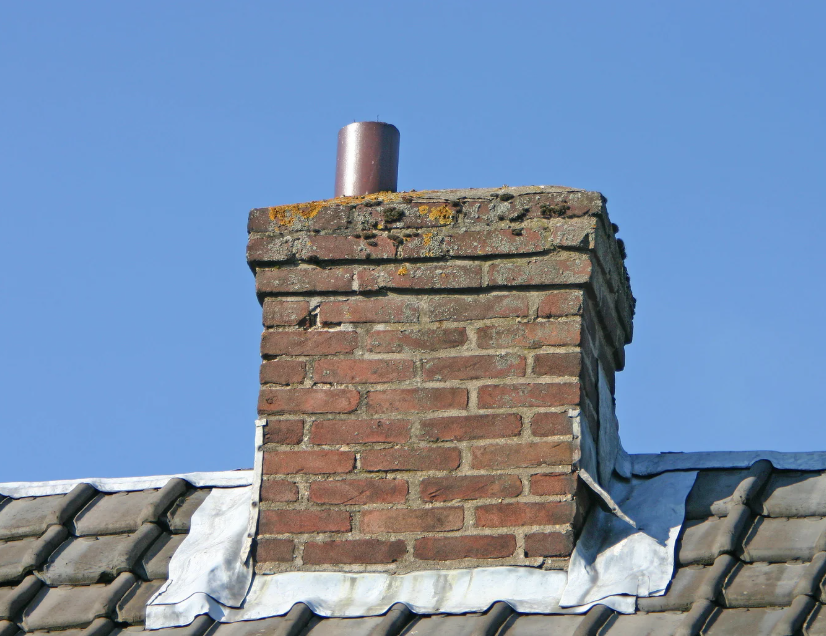
- Failed flashing where the chimney meets the roof
- Cracked crowns or defective caps
- Deteriorated mortar joints
- Damaged bricks
- Moisture interacting with deposits inside an old flue
Painting over a stain or adding a grille will not correct every cause. Persistent dampness needs diagnosis before cosmetic repairs.
What Should Toronto Homeowners Check Before Winter?
Arrange a ground-level review for loose masonry, staining, and visible deterioration. Have inaccessible areas assessed professionally rather than climbing onto a wet or icy roof.
If you notice winter drafts, ask about a compatible closure and ventilation strategy instead of stuffing the opening with insulation or sealing every gap.
Cummins Restoration provides chimney repair, brick repair, and tuckpointing throughout Toronto and the GTA. Contact the team to discuss an unused chimney, visible masonry defects, or recurring dampness. A professional assessment can help identify necessary repairs and clarify how a proposed closure should manage weather exposure and ventilation before winter conditions make access more difficult.


